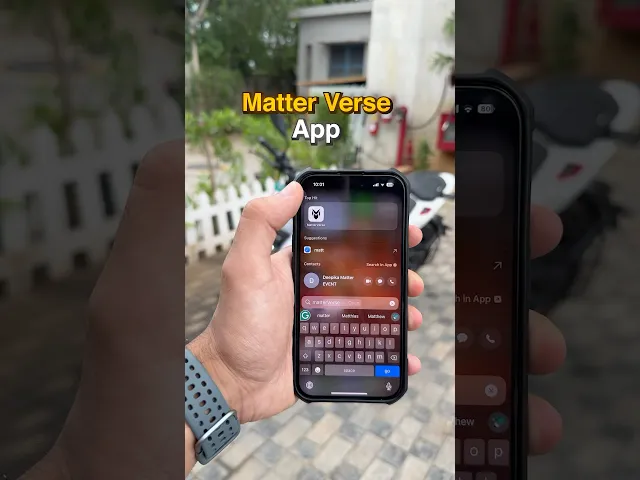
Designing core interactions and companion experiences for electric mobility products
EV Mobility
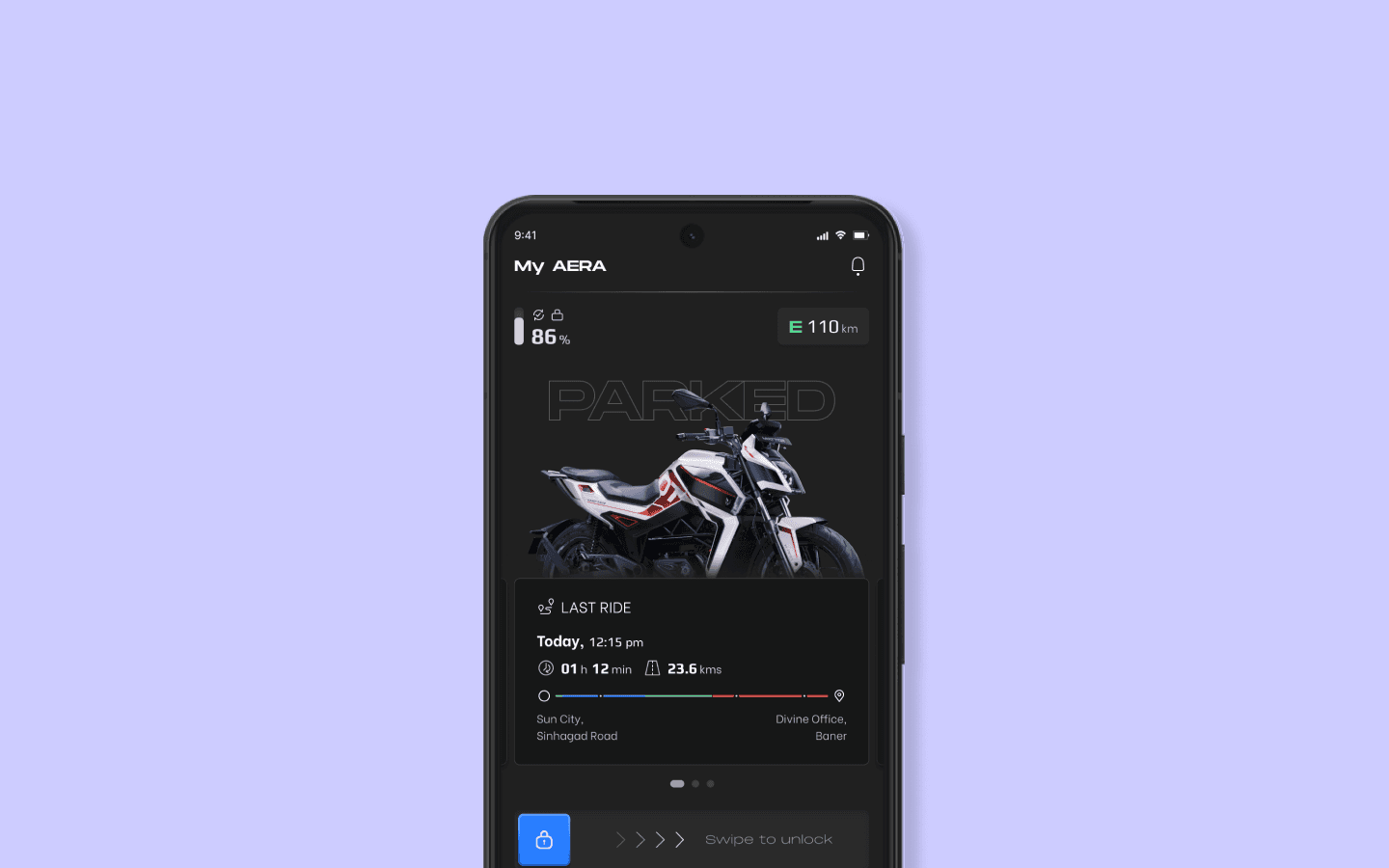
Vehicle companion UX design for EV riders
Boosting Conversion Rates for E-commerce Checkout
EV ownership is often marred by range anxiety and disconnected hardware. The challenge lay in bridging the gap between machine data and rider trust. The solution required replacing ownership friction with a unified digital ecosystem—integrating remote access and live diagnostics to transform the Matter AERA into a reliable, fully connected companion.
Industry
EV Mobility
My Role
Experience Designer
Platforms
Android & iOS
Designing the connected experience for MATTER EVs
MatterVerse is the connected companion app for Matter Motor Works’ AERA, India’s first geared electric motorcycle.
It transforms a high-performance EV into a living, connected system — translating complex sensor data into simple, meaningful insights for riders.
As the Product Experience Designer, I led the design for the app’s end-to-end rider experience — from connection and telemetry visualization to remote control, navigation, and feedback systems.
The mission: make every digital interaction feel as tangible and trustworthy as the ride itself.
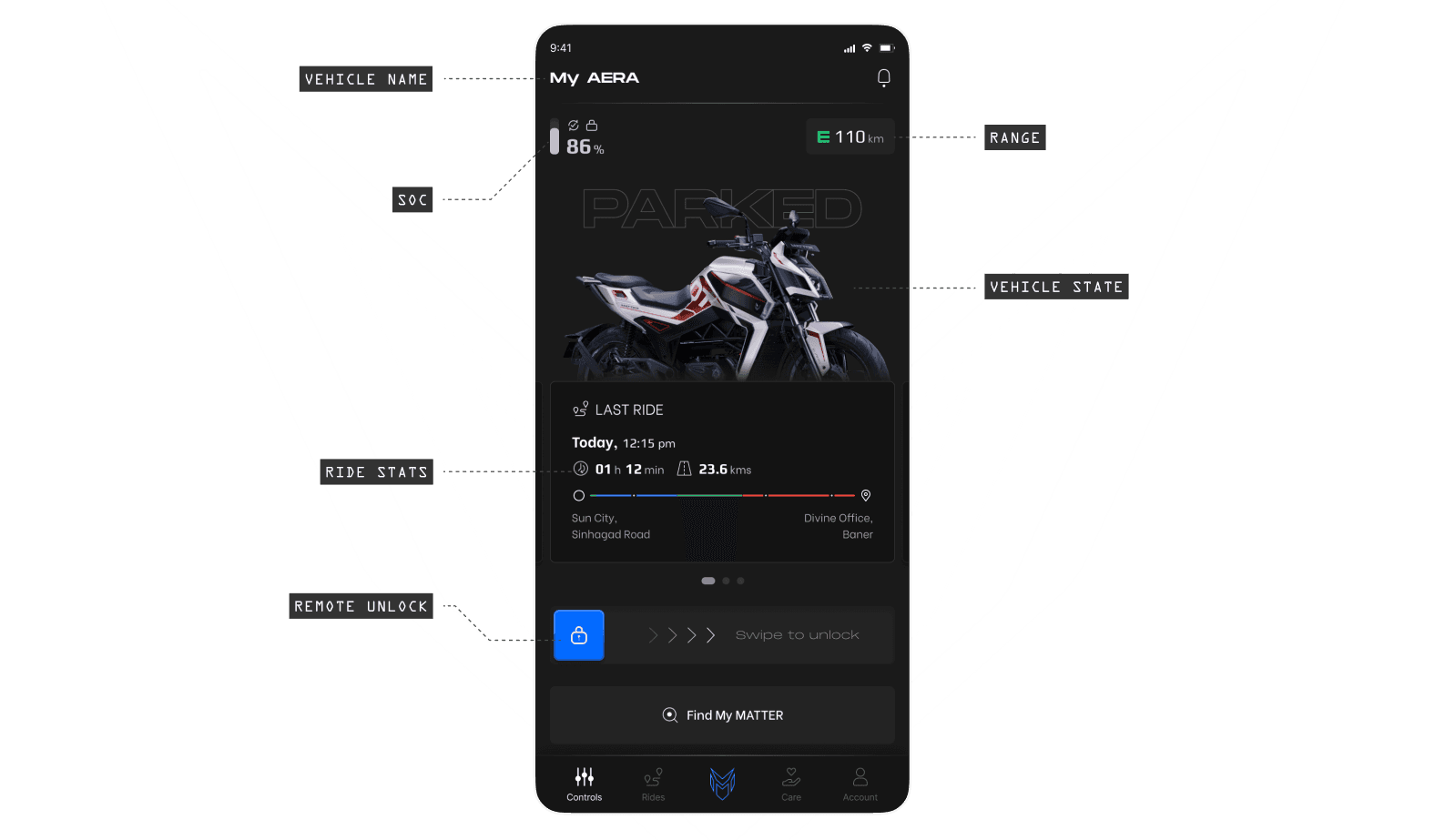
Background & Opportunity
Matter built a breakthrough EV platform — but the intelligence was trapped inside the machine.
The opportunity was clear: give riders a window into that intelligence through design.
We weren’t just building a dashboard. We were building the digital layer of ownership — one that connects rider, vehicle, and brand in a seamless feedback loop.
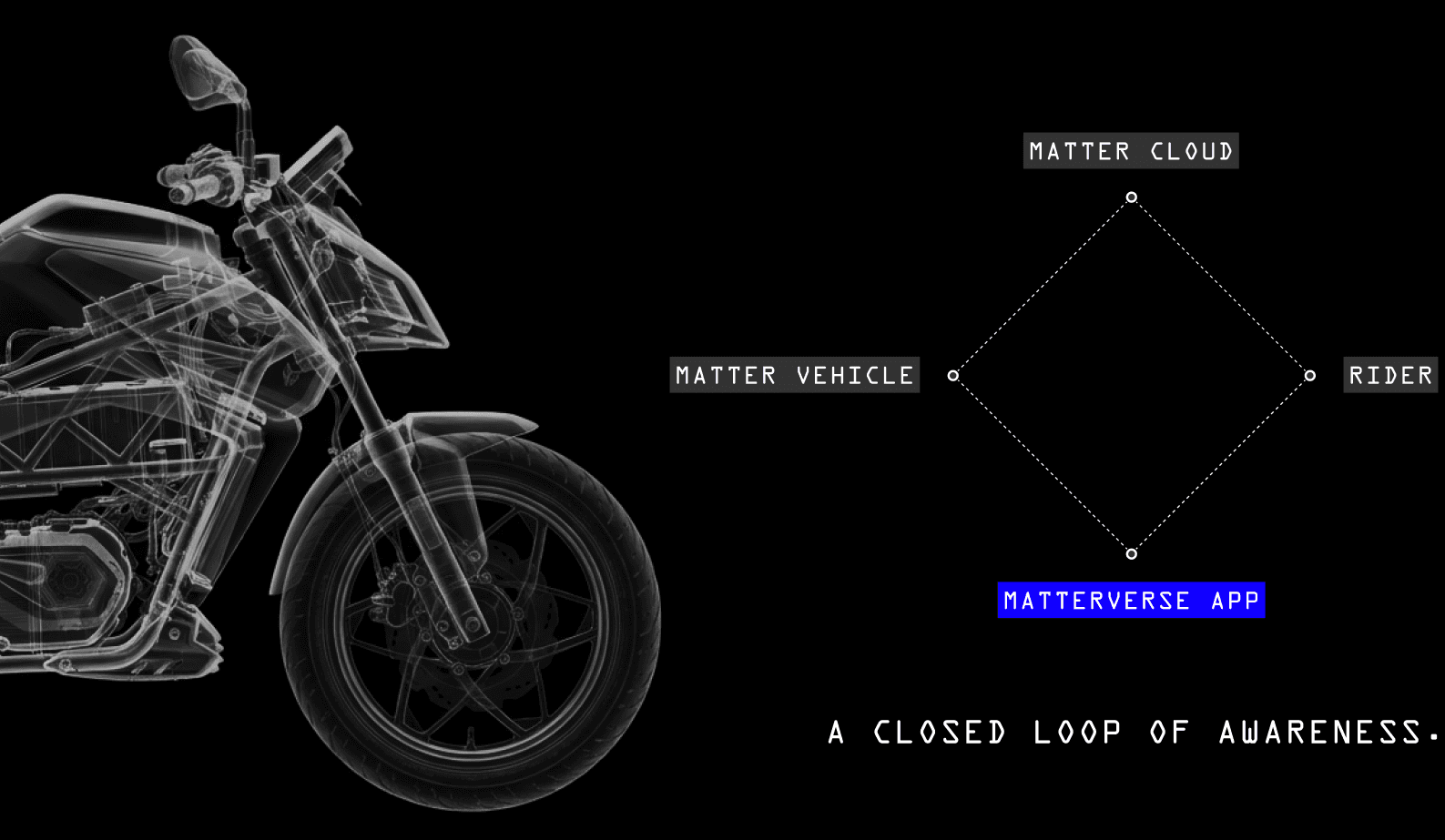
How it Works:
The AERA constantly collects data from its sensors — battery health, speed, GPS, temperature. That data moves through the Matter Cloud, syncing in real time with the app. Commands from the phone — like “lock vehicle” or “push route” — travel the same path in reverse.
Bike → Cloud → App → Rider — and back again.
Every interaction lives within this loop, forming the foundation of Matter’s connected ecosystem.
Problem Definition
Electric vehicles come with a paradox — more intelligence, less visibility.
Riders felt disconnected from what their machine was doing once the helmet was off.
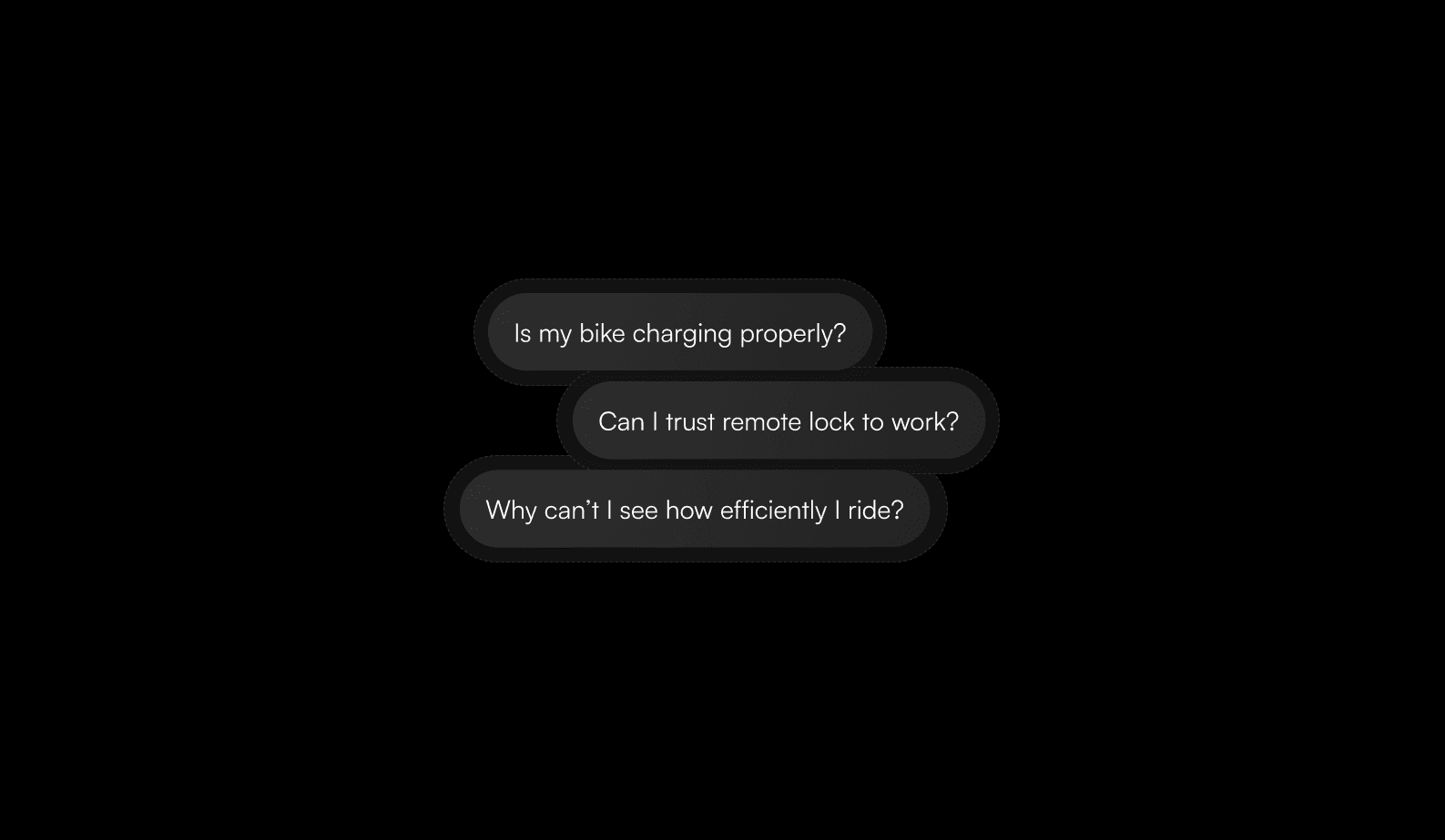
We heard recurring questions in early testing:
Is my bike charging properly?
Can I trust remote lock to work?
Why can’t I see how efficiently I ride?
Our challenge was to translate raw telemetry into emotional confidence — to make technology feel human, visible, and calm.
Vision & Hypothesis
We envisioned MatterVerse as a companion, not a control panel — an interface that speaks the language of clarity and anticipation.
Our hypothesis:
If we design for trust over control, riders will feel closer to their machine and to the Matter brand itself.
Design principles that guided us:
Transparency builds confidence — every state should communicate clearly.
Motion is language — feedback should feel alive, not decorative.
Information needs emotion — data only matters when it’s relatable.
Design Process
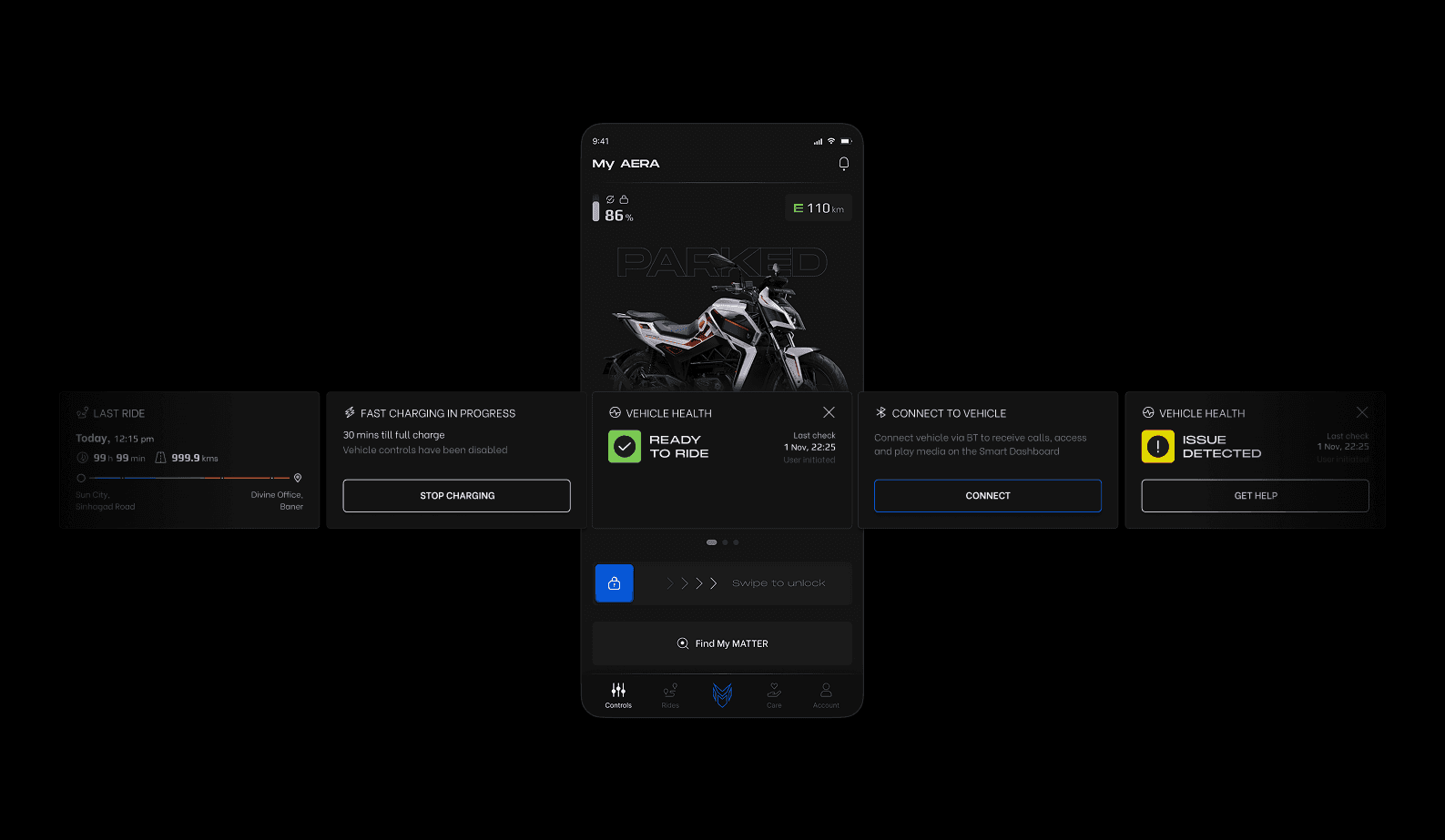
The goal wasn’t just to design an app — it was to shape a connected experience around confidence and clarity.
Each feature followed the same arc:
Define the rider persona
Map their moments of interaction
Prototype micro-interactions
Refine for trust and readability on the move
Research → Ideation → Testing → Iteration
Rider interviews revealed a need for reassurance, not control.
Low-fidelity flows tested for clarity during motion or distraction.
Iterations prioritized tactile, confirmable interactions.
Key Design Decisions
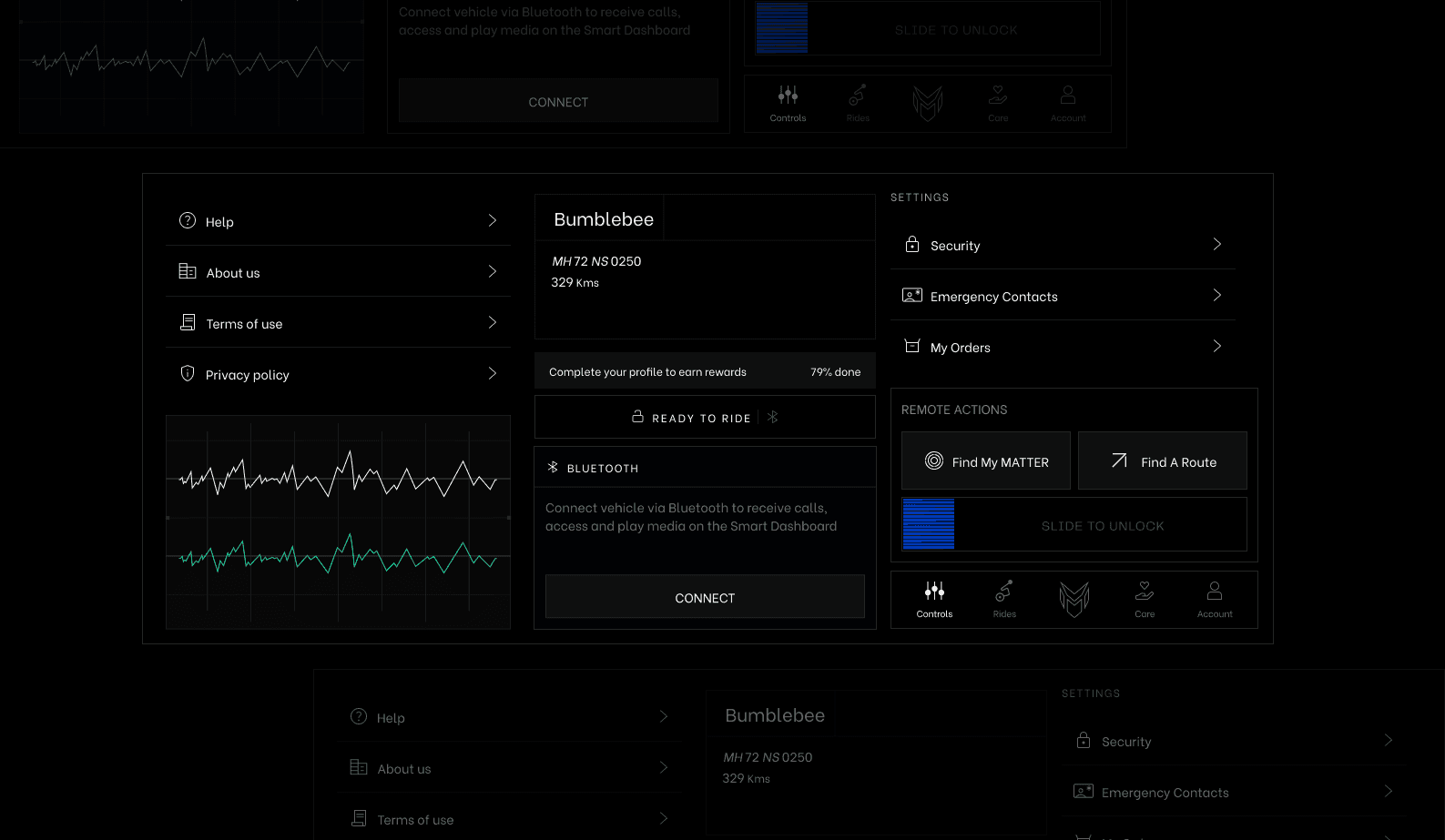
Ride Insights — Designing Meaning into Motion
Telemetry isn’t just numbers — it’s a rhythm.
We designed a data layer that tells a story: distance trends, ride efficiency, and personalized patterns. The challenge was balancing precision with personality, surfacing meaningful trends riders could understand at a glance.
This also allowed rides to be shared, turning performance data into motivation.
Navigation to Smart Dashboard
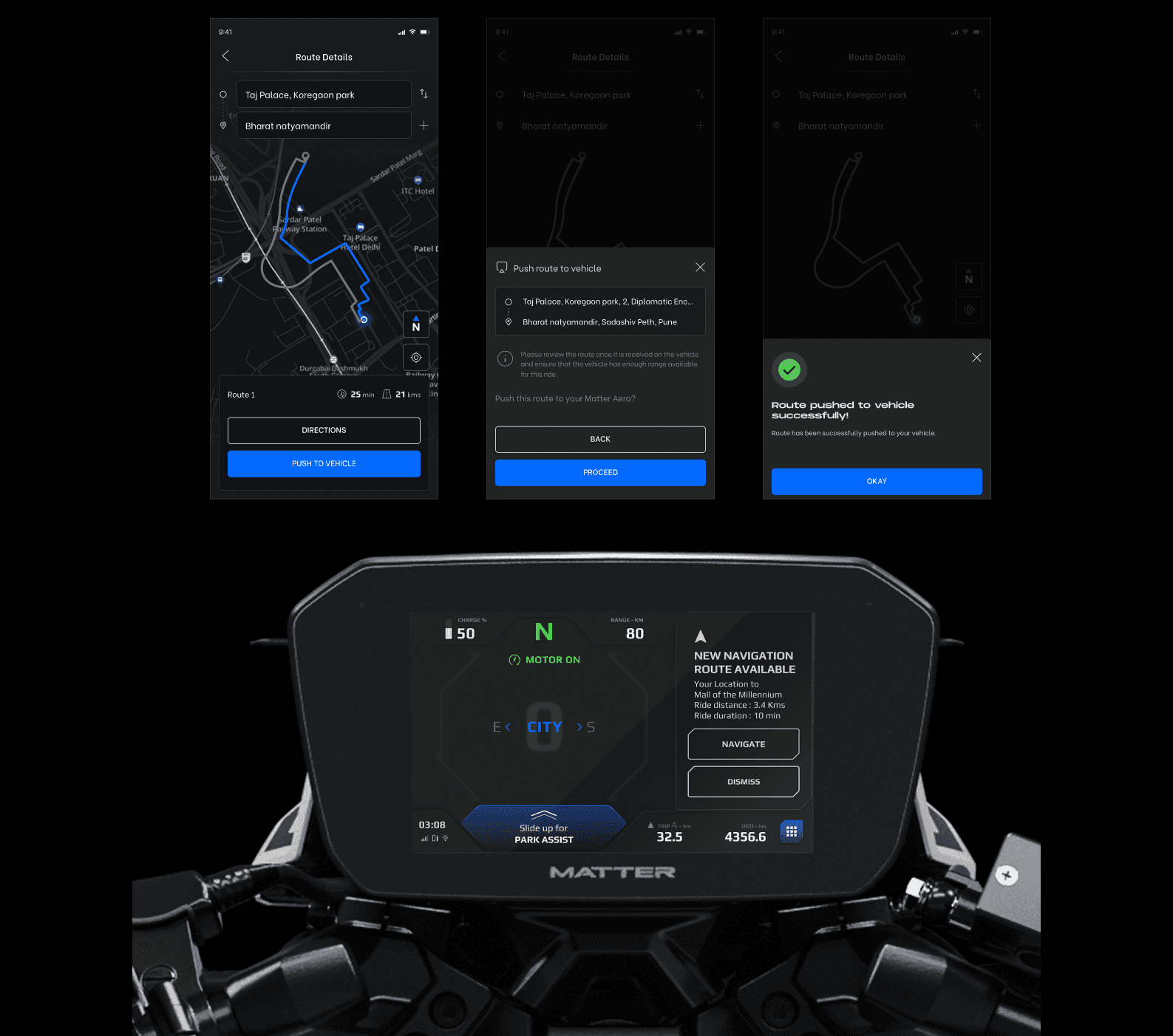
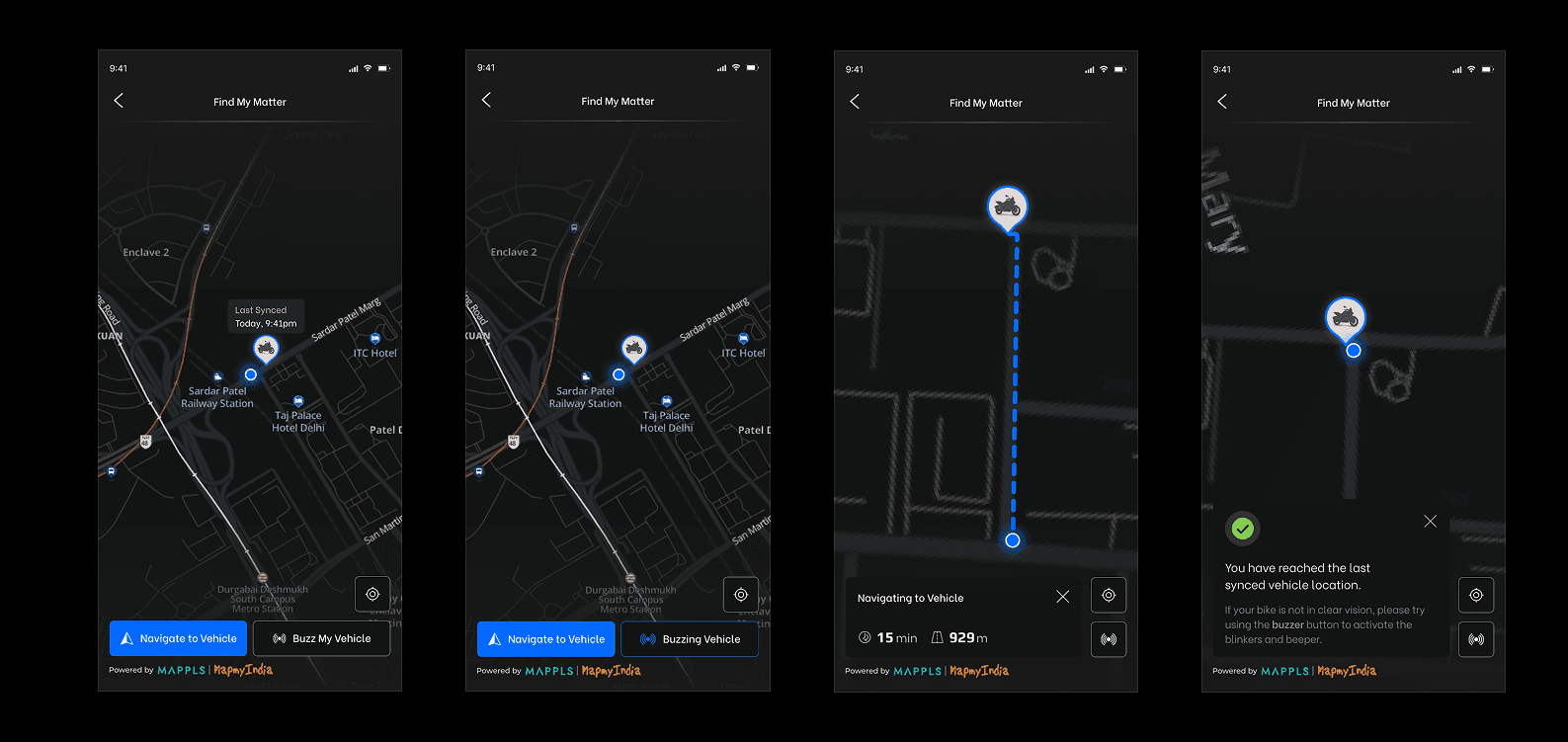
Pushing routes from phone to bike needed to be frictionless and distraction-free.
We focused on clarity, minimal attention, and zero cognitive load, creating a flow that feels almost invisible — a quiet interaction with big impact.
Find My Vehicle
Remote Access & Controls
Designing trust into invisible interactions.
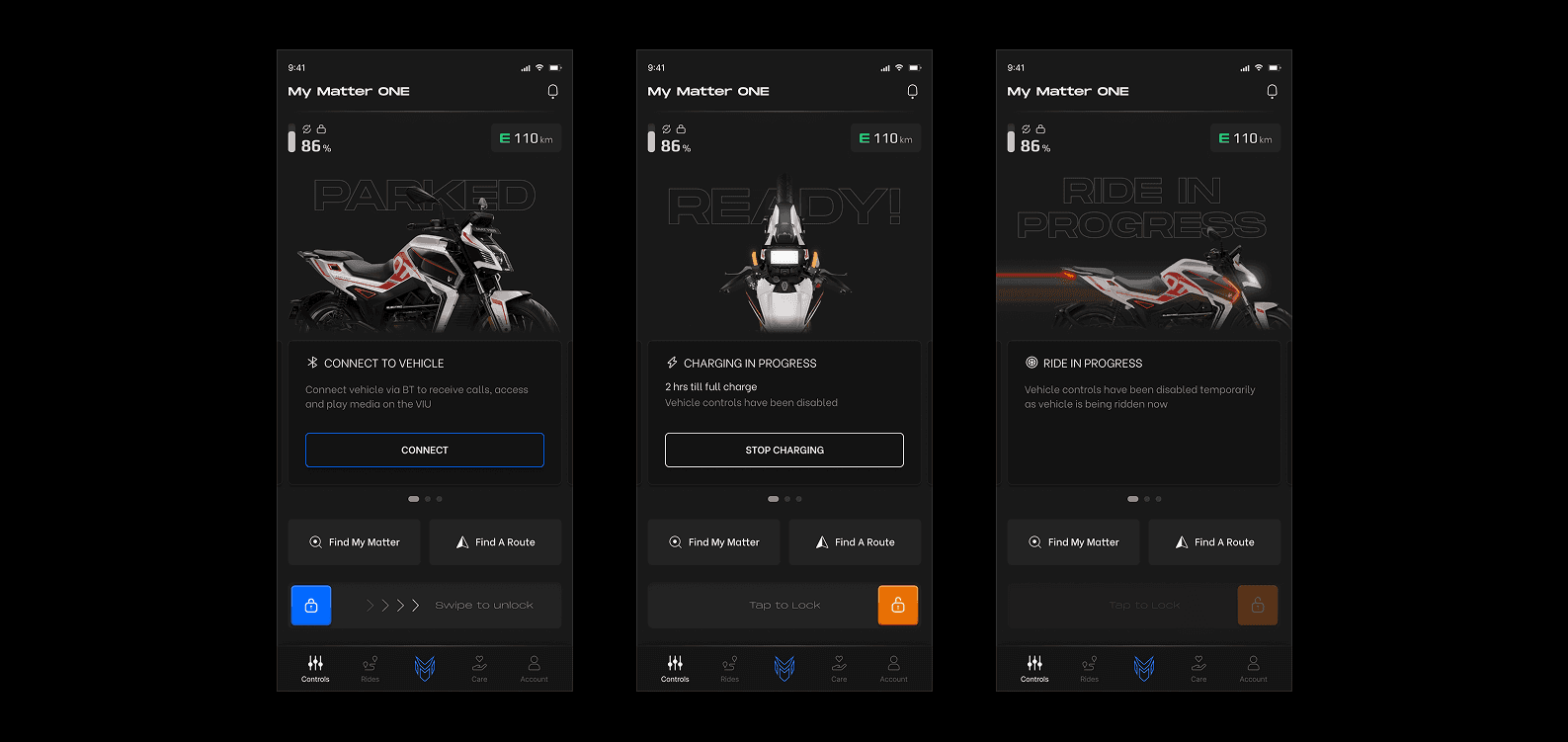
When a user taps Lock or Unlock remotely, the interface must feel immediate and alive — even when the action happens kilometers away. Micro-interactions became the emotional glue here: subtle haptic patterns, real-time feedback, and visual affirmations that the system is listening.
Launch & MVP Learnings
We launched with core capabilities — live status, remote control, and ride insights — prioritizing feedback over feature volume.
Key learnings post-launch:
Riders valued peace of mind over analytics.
Real-time visual feedback significantly reduced support tickets.
Smart notifications (e.g., charge reminders) boosted daily engagement.
The most-used feature wasn’t flashy — it was simply checking the app to “make sure my bike’s okay.”
Evolution & Future Direction
MatterVerse is evolving beyond ownership into an intelligent mobility ecosystem — connecting people, vehicles, and services seamlessly.
Next steps include:
Predictive insights using AI-powered telemetry
Smart watch and wearable integration
Community features for riders to share, compare, and grow
Key Product Decisions
What we chose to abstract?
Raw vehicle telemetry into simple system states instead of exposing detailed machine data, prioritizing rider trust over technical completeness.
What we shipped first (and why)?
We focused the initial experience on core ownership moments rather than feature breadth, ensuring reliability and clarity before expanding functionality.
Risk we accepted
We designed the companion experience as a primary touchpoint rather than a secondary dashboard, accepting higher UX responsibility to build long-term trust.
Outcome
+18% increase in engagement with the Experience flow during internal testing
Established core UX foundations for Matter’s digital ownership ecosystem.
Shipped primary mobile experiences across Android and iOS.
Reflections
With more time, I’d validate rider trust signals earlier in the process and prototype ownership moments more deeply before expanding feature breadth. This project reinforced the importance of designing for clarity and reliability before layering in complexity when building connected product ecosystems.
Select this text to see the highlight effect