Time-to-Report reduced by 40% compared to manual digital reviews
HealthTech
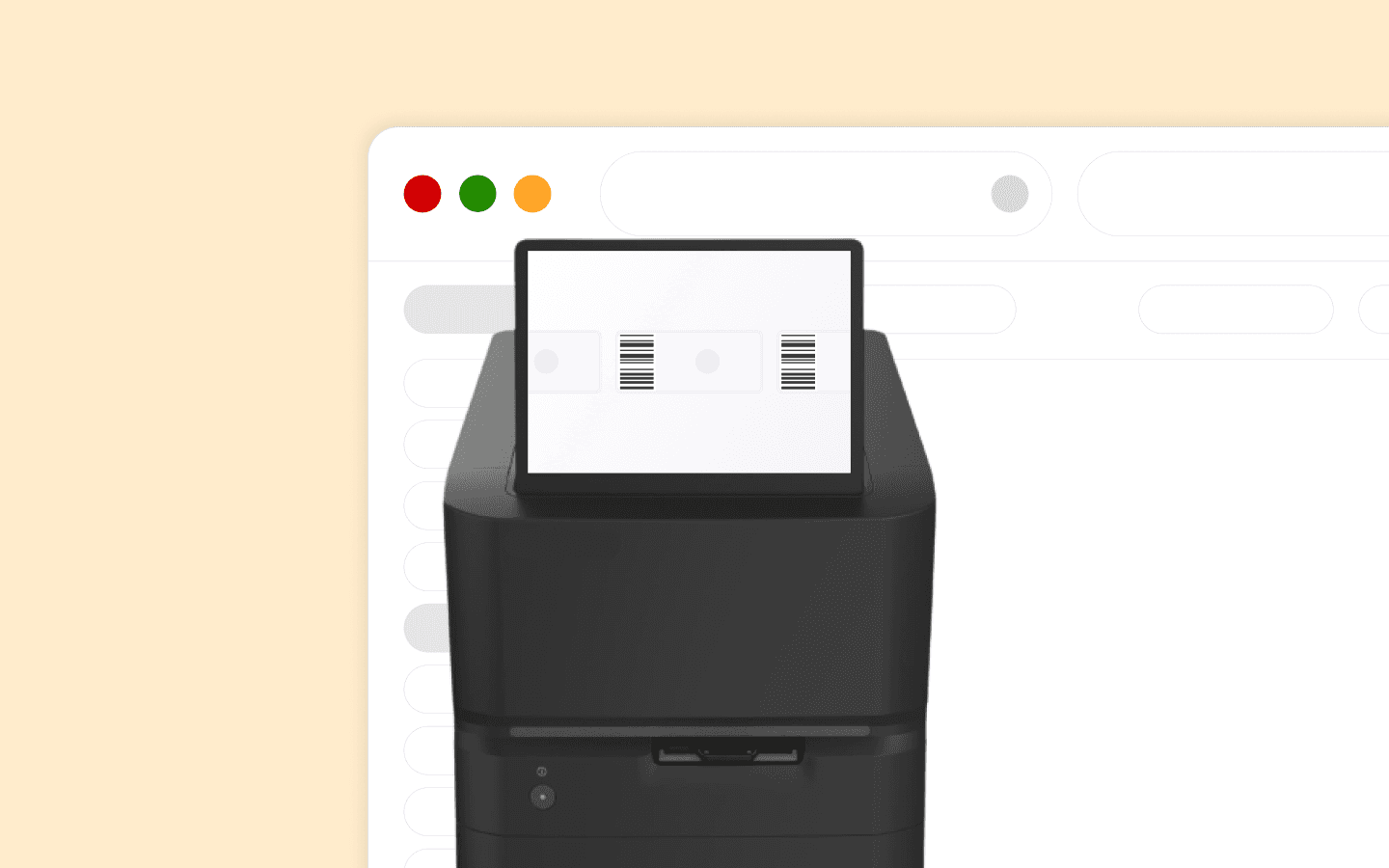
AI-powered diagnostic system for pathology
Digitizing the microscope workflow to reduce diagnostic turnaround time by 10x for pathologists.
Manual microscopy is the primary bottleneck in global pathology. Pathologists spend hours hunched over eyepieces, manually counting cells—a process prone to fatigue-led errors and poor scalability. SigTuple AS76 is an AI-powered robotic microscope designed to automate this, digitizing slides at 100x magnification and pre-classifying cells for rapid human validation.
Industry
HealthTech
My Role
Product Designer
Platforms
Web app
The Core Challenge
The problem wasn't just digitizing a slide. It was cognitive load management. An average blood smear contains thousands of cells. If the AI presents every single data point, the pathologist faces alert fatigue. If it hides too much, clinical trust evaporates.
My objective: We aimed to architect a review interface that enables a "review by exception" workflow—allowing pathologists to confirm 200+ WBCs in seconds rather than minutes.
Key Execution Pillars
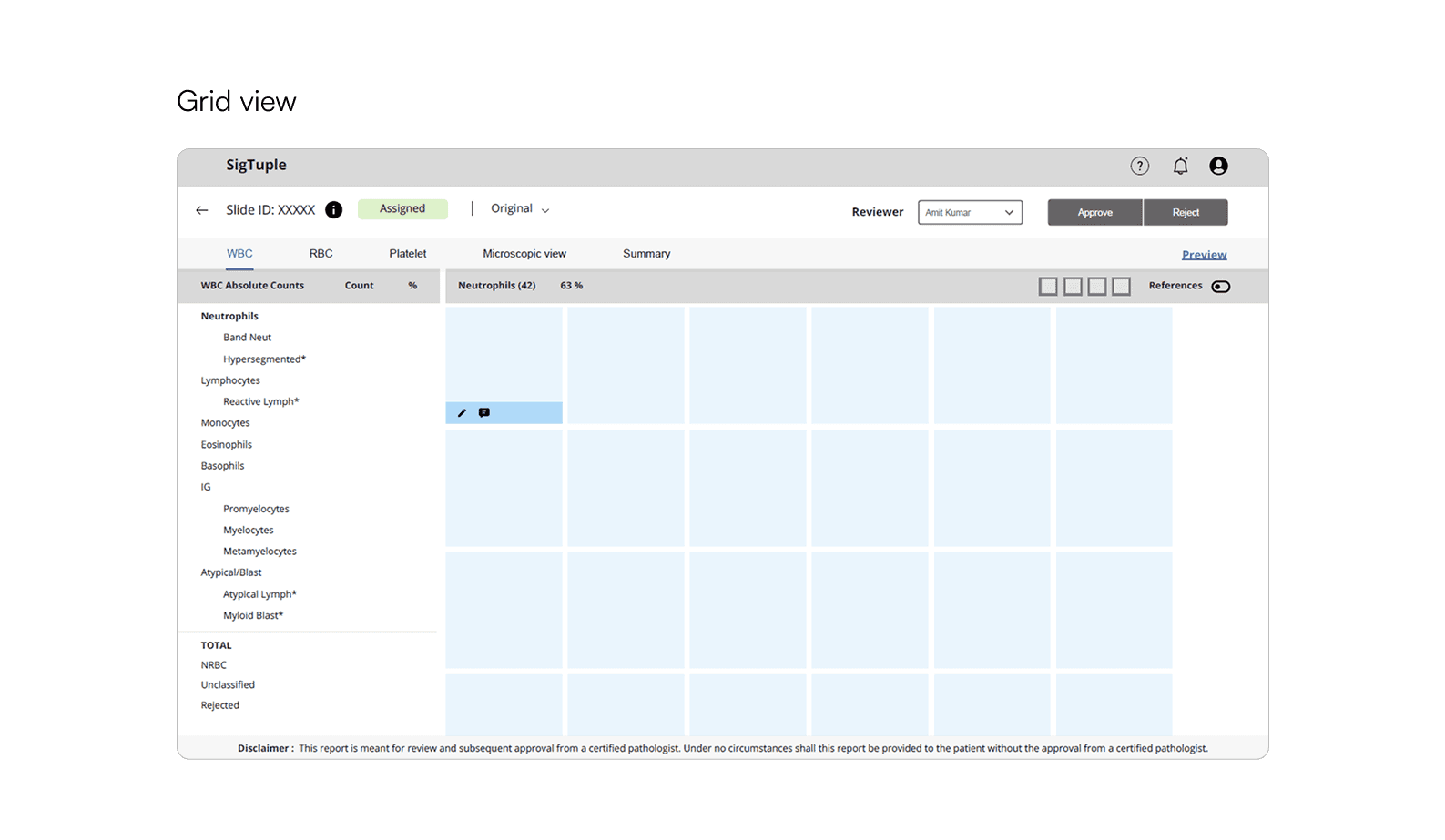
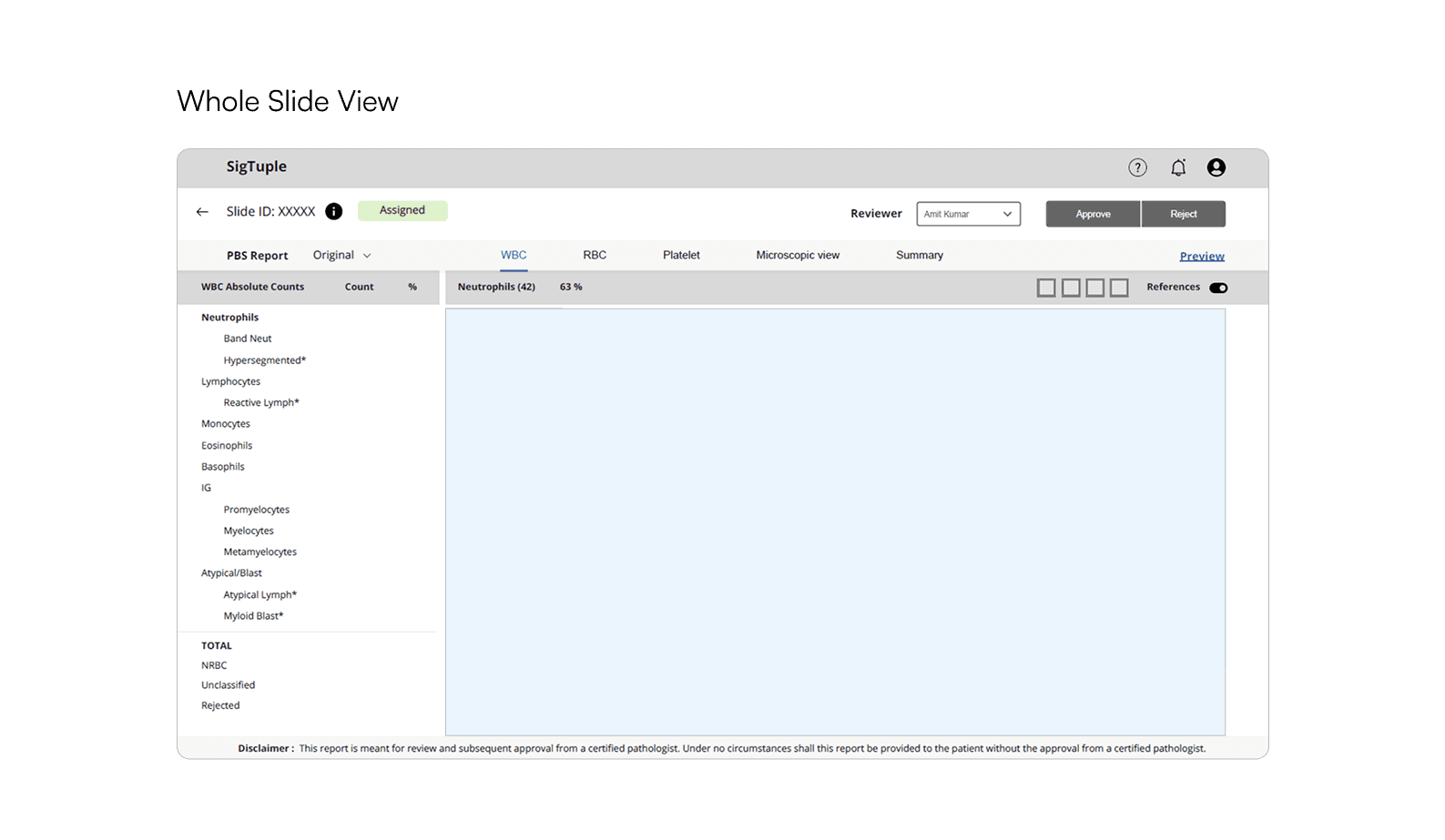
The Review-by-Exception Interface Instead of a traditional gallery of images, we designed a Pre-Classified Grid System. * The Logic: We leveraged the AI to group cells (Neutrophils, Lymphocytes, Blasts) automatically.
The Interaction: We enabled pathologists to scan the groups for "outliers." A single click reclassifies an entire batch, or drags a misclassified cell into the correct bucket.
Auto Classification
Manual Classification
Maintaining the Pathologist’s Intuition - Medical professionals trust what they can see. Digital pathology often fails because "it doesn't look like my microscope."
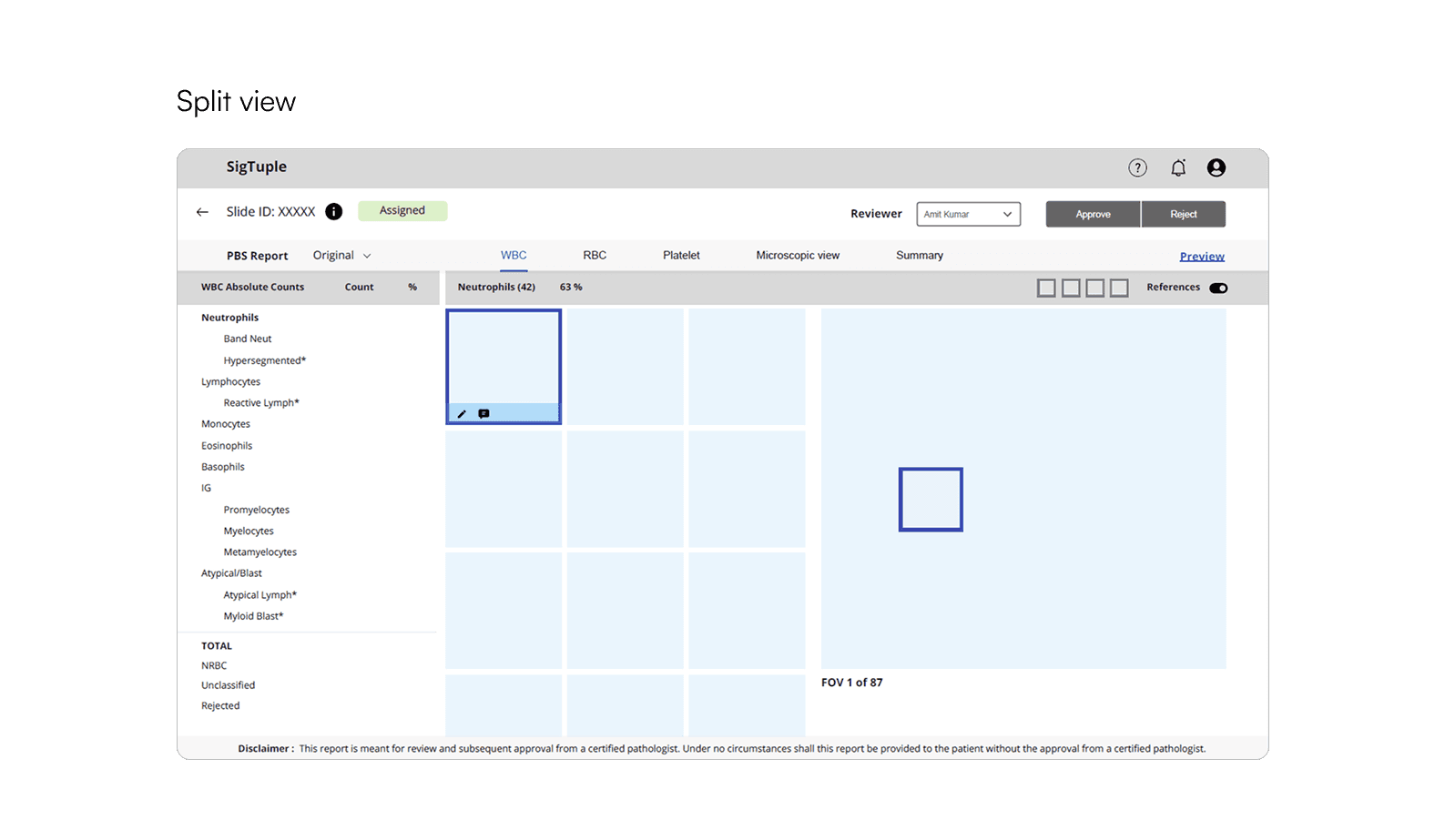
Microscopic View
Solution: We implemented a Contextual Toggle. At any point, the user can jump from a cropped single-cell view to the full-slide 100x FOV (Field of View).
Technical Detail: We optimized the UI to handle high-resolution image tiling (400MB+ per slide) without latency, ensuring the "zoom-to-context" felt instantaneous.
Report Summary
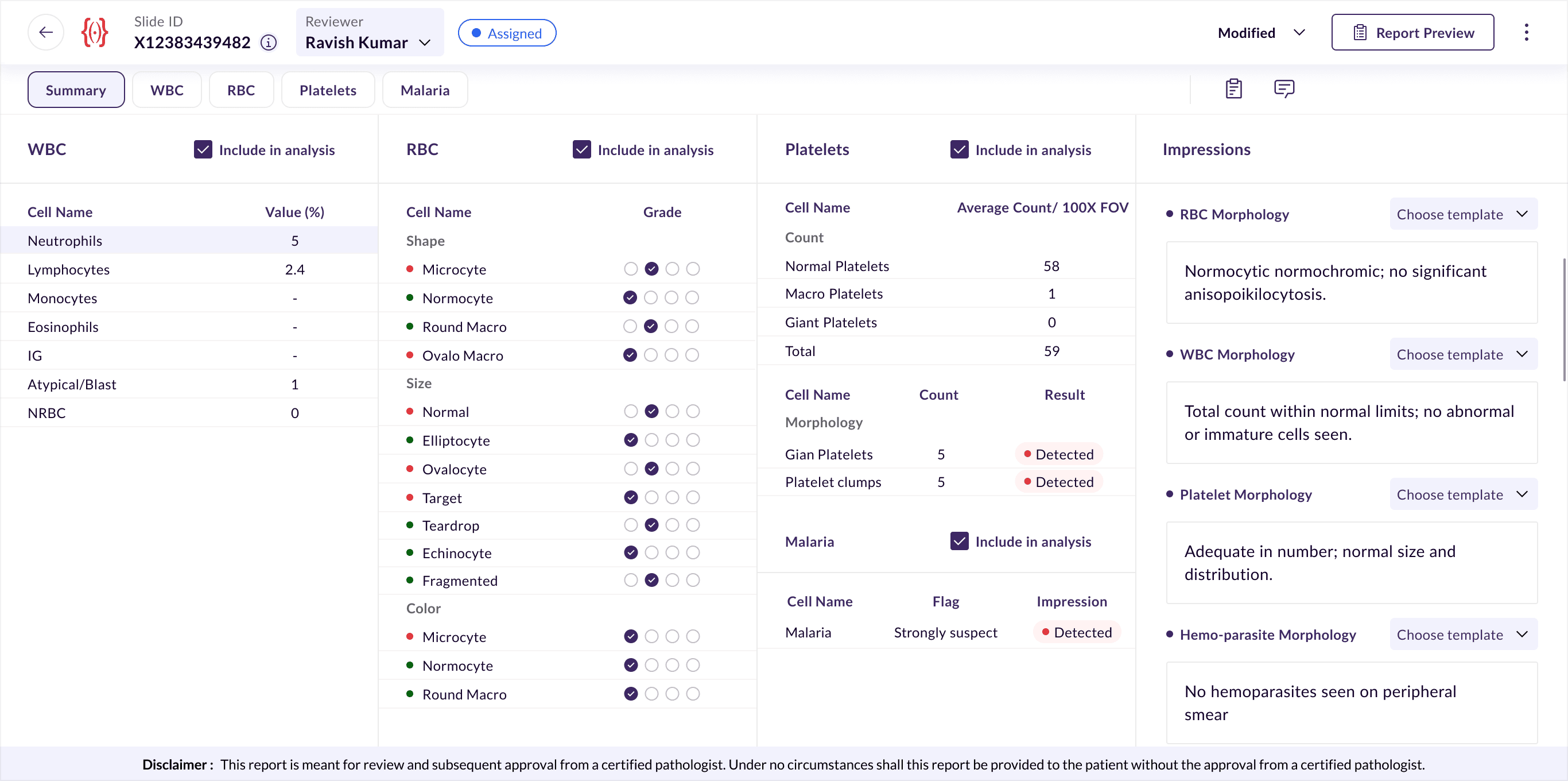
Approving the report - Post carefully reviewing, pathologist can mark the report approved
Designing for the Physical Ecosystem
The AS76 is a physical robot (6-slide tray, automated oil dispensing).
How we arrived here?
We went through hundreds of iterations before arriving at what we shipped. Because this was a tightly coupled hardware–software system, every design decision had downstream implications on workflow, device behavior, and AI interpretation. We continuously prototyped, tested with clinicians, stress-tested edge cases, and refined interaction patterns to reduce cognitive load and ambiguity. The final product wasn’t the result of a single breakthrough — it was the outcome of disciplined iteration, cross-functional collaboration, and relentless simplification of complex workflows.
Technical Impact
Throughput: We supported a system capable of processing 12 slides per hour with fully automated imaging.
Precision: We enabled ICSH-standard grading for 2,000+ RBCs and automated counting of platelets from ten 100x fields.
Accessibility: We built the interface to be cloud-agnostic, allowing remote specialists to sign off on reports from any location, effectively democratizing high-end diagnostics for rural labs.
"Our goal wasn't to replace the pathologist, but to give them a 10x faster lens."
Key Product Decisions
What we optimized for?
We optimized for review speed over visual depth, simplifying the interface to only essential validation actions — pushing advanced analytics to secondary screens.
Constraint-driven choice
Because pathologists already trusted microscope workflows, we mirrored familiar patterns instead of introducing new interaction models.
Risk we accepted
We leaned into AI pre-classification early to reduce cognitive load, accepting short-term trust risk to achieve long-term efficiency gains.
[Outcome]
Reduced diagnostic review time by ~40% compared to manual digital workflows.
Enabled pathologists to validate AI-classified samples faster with simplified review interfaces.
Shipped production-ready workflows supporting real clinical usage.
Reflections
If I were to revisit this project, I’d involve engineering earlier while defining review constraints and edge cases, and spend more time validating trust signals with clinicians before expanding advanced features. The project reinforced how critical it is to design for speed and reliability first when building tools for high-stakes medical environments.